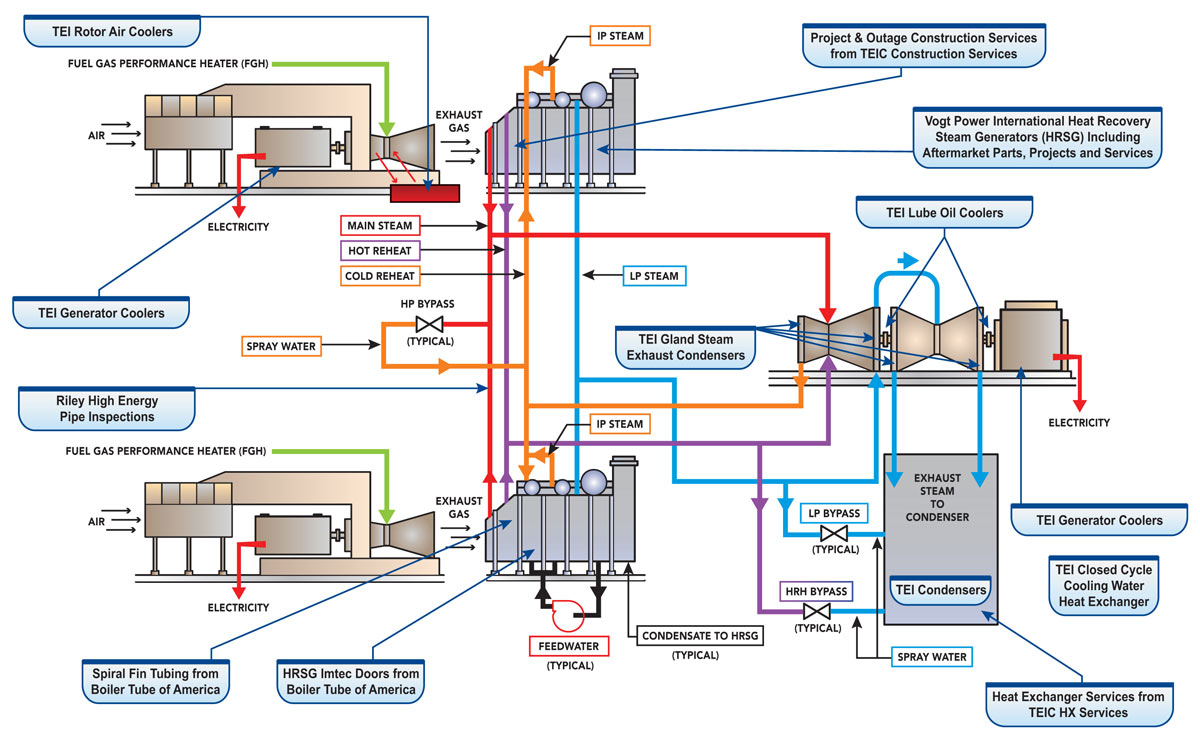
Combined cycle plants depend on the Heat Recovery Steam Generator to convert gas turbine exhaust into steam for additional power generation. As operating demands change, HRSG performance becomes an important part of maintaining plant efficiency, output, and long-term reliability.
Lifecycle planning helps operators evaluate how current operating conditions affect HRSG components and what steps may be needed to sustain dependable performance over time.
Why HRSG Performance Matters
The HRSG acts as the bridge between the gas turbine and the steam cycle. Heat transfer surface arrangement, pressure levels, and steam flow paths all influence how effectively energy is captured from turbine exhaust.
When these systems are properly engineered and maintained, they support stable plant output and efficient operation. When performance begins to decline, the impact can extend beyond the HRSG itself and affect the broader combined cycle system.
Changing Operation Creates New Stress
HRSG components operate under continuous thermal and mechanical stress. High-temperature sections, pressure parts, and tube assemblies are especially important to monitor as plants experience load changes, cycling, or modified operating profiles.
Gas turbine upgrades can also affect downstream HRSG conditions. As output expectations change, operators may need to evaluate whether existing heat recovery equipment remains aligned with current plant requirements.
The Role of Inspection and Evaluation
Effective lifecycle planning begins with understanding equipment condition. Regular inspections, performance evaluations, and engineering studies help identify developing issues before they affect reliability.
These evaluations can support decisions around repairs, replacement parts, performance improvements, or retrofit planning. They also help operators prioritize work based on current condition and future operating needs.
Planning for Long-Term Reliability
HRSG lifecycle planning is not a single maintenance activity. It is an ongoing approach to understanding how design, operation, inspection findings, and future plant requirements work together.
As combined cycle demand grows, proactive attention to HRSG condition and performance will remain important for reliable plant operation. At Vogt, this is why lifecycle support, engineering insight, retrofit capabilities, and cross-OEM experience remain central to helping operators sustain dependable heat recovery performance.
HRSG lifecycle support through Babcock Power Subsidiaries
Vogt works with our sister companies to provide full lifecycle support from inspection to implementation for all OEM.
TEiC: Construction Provides skilled labor and project management to provide full turnkey solutions from design to erection
BTA: Pressure Part Fabrication Provides domestic fabrication for harps and pressure parts, with an in-house spiral finning machine, in addition to non-pressure parts such as casing panels
BPS: Non-Destructive Evaluation Handles the execution of routine and long-term inspection options
Vogt Power: Inspection and Engineering Design Dedicated service with an emphasis on safety, condition diagnostics, and long-term asset planning