

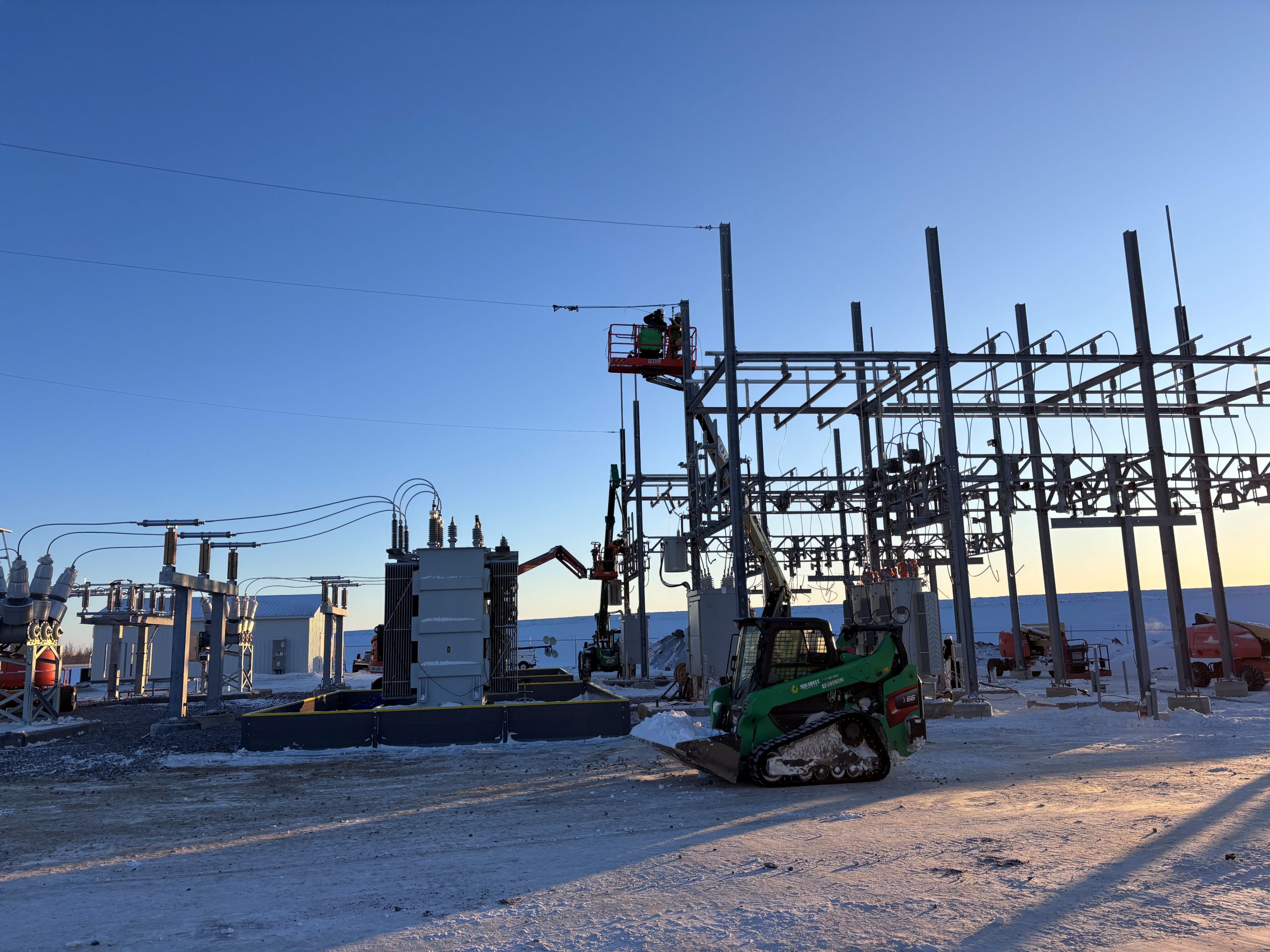
Power delivery construction is entering a demanding period. There is a pressing need for additional transmission infrastructure as load grows from data centers, manufacturing, and other large users. At the same time, the industry is seeing difficulty maintaining enough labor across transmission, distribution, and storage. In this environment, how work is organized in the field can be as important as the design itself.
1. Clearer Workforce Accountability
When a contractor self-performs key activities, supervision and craft execution operate within a more direct line of responsibility. Roles, work packages, and daily priorities can be communicated through one field structure, helping project leaders see who owns each task and how progress aligns with the plan.
2. Stronger Field Coordination
Substation work requires careful sequencing among civil, structural, and electrical activities. Direct control of selected scopes can make it easier to coordinate crews, respond to actual site conditions, and adjust the sequence without adding unnecessary handoffs between organizations.
3. Consistent Quality Control
Quality depends on disciplined installation, inspection, and documentation. A self-perform approach can support consistent expectations across crews, provide clearer visibility into workmanship, and help teams address issues while the work is still accessible.
4. Safety Integrated with Execution
Safety planning is most effective when it is built into the work plan. Bringing supervision and key construction activities under one operating structure can help align pre-task planning, crew communication, site controls, and changing field conditions.
5. Better Schedule Visibility
Self-performance does not remove schedule risk, but it can improve visibility into labor, production, and constraints. That information helps project teams identify emerging issues earlier and coordinate corrective action with engineering, procurement, and the owner.
Self-performance is not the right model for every scope or project. Its value is strongest when it matches the contractor’s proven capabilities, staffing plan, and project controls. For Paradigm, that practical fit is central to using self-perform capabilities to support accountable, coordinated, and dependable power delivery execution.





