

Wind turbines operate under changing loads, vibration, weather, and repeated starts and stops. When inspections identify structural cracking, damaged teeth, worn braking surfaces, or distorted interfaces, the repair decision affects more than the immediate return to service.
This necessitates condition-specific repair planning rather than a one-size-fits-all response.
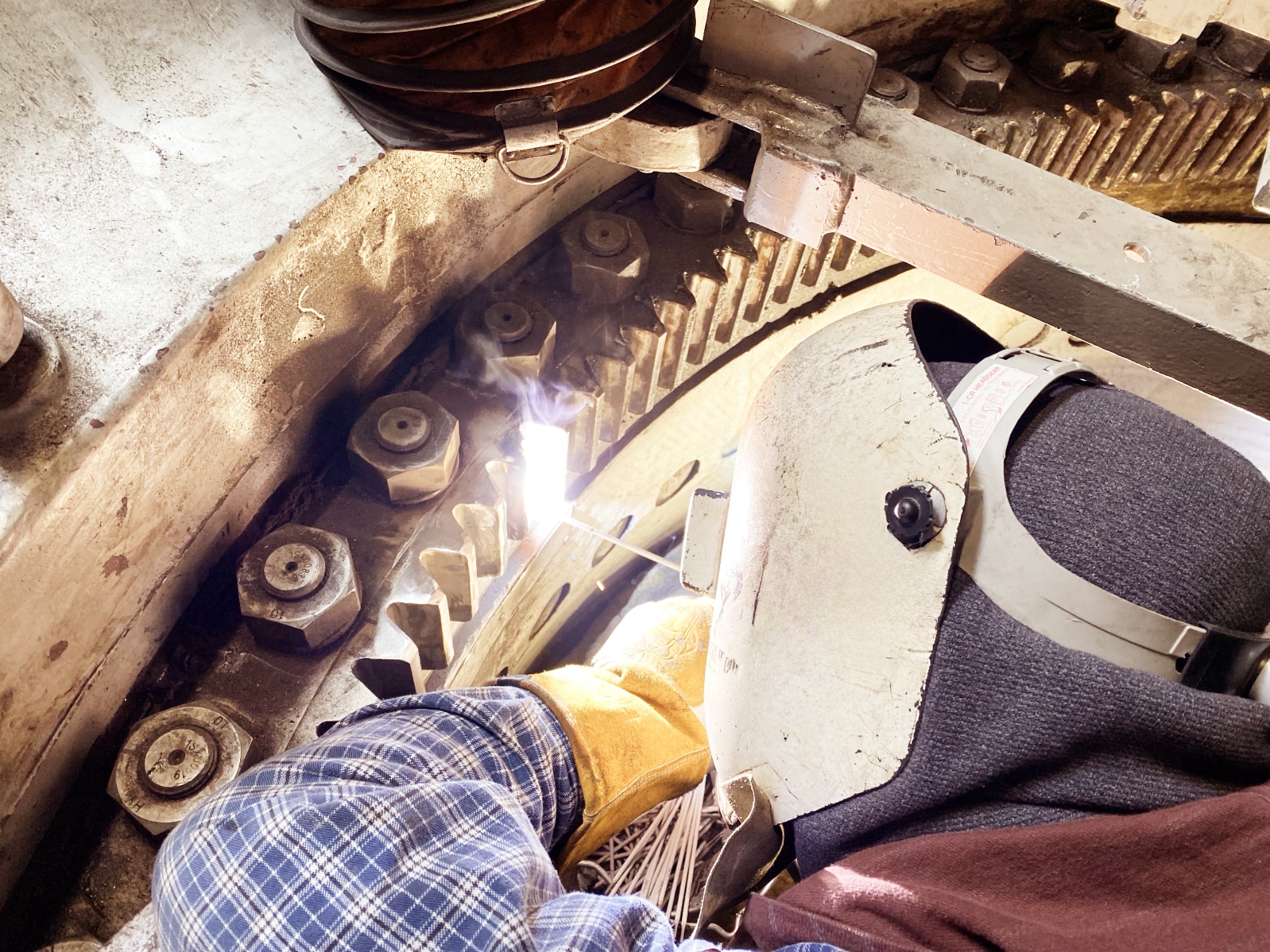
Start with a Defined Repair Basis
A reliable repair begins with a clear understanding of the component, material, damage location, operating context, and applicable OEM requirements. Precision NDT can help define crack extent and verify the surrounding condition without unnecessarily damaging the component. Those findings should inform the repair procedure, welder qualification, machining allowances, inspection hold points, and acceptance criteria before field work begins.
Control Welding and Machining as One Scope
Structural welding and machining often solve connected problems. Welding restores damaged material or geometry, while in-place machining can recover fit, alignment, tooth profile, flange condition, or braking surfaces. Treating them as one coordinated scope helps teams manage dimensions, heat input, access, tooling, and final verification together. This is especially important uptower, where field conditions and limited work space can affect execution choices.
Verify the Repair and Preserve the Record
Repair quality depends on more than completing the weld or machining pass. Inspection results, approved procedures, technician qualifications, dimensional checks, NDT findings, and completion reporting create the record needed to support return-to-service decisions and future maintenance. Wind turbine reliability is increasing relying on inspection and structural health monitoring to keep an eye on the impact of cyclic loading and fatigue cracking.
For wind asset owners, the practical takeaway is straightforward: field repairs should be planned as controlled engineering work, not isolated craft tasks. At Renewable Concepts, this is why welding, uptower machining, NDT support, qualified procedures, and detailed reporting are aligned around safe execution and dependable long-term turbine performance.





