July 29, 2026 | 2 Minute Read
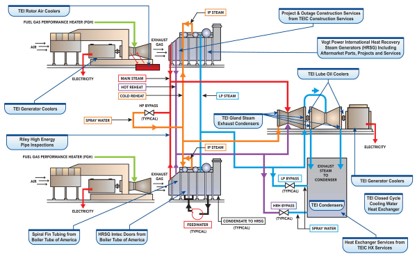
Combined cycle plants are designed around a simple principle: capture and utilize as much available energy as possible. While the gas turbine generates the primary power output, a significant amount of thermal energy remains in the exhaust stream. The Heat Recovery Steam Generator (HRSG) is responsible for converting that otherwise wasted heat into useful steam for additional power generation. As plants continue to focus on efficiency and operational flexibility, maximizing heat recovery remains one of the most effective ways to improve overall plant performance.
HRSG Design Strategies for Maximizing Heat Recovery
The ability of an HRSG to recover energy depends on a variety of design considerations. Heat transfer surface arrangement, pressure level configuration, steam conditions, and gas flow characteristics all influence how efficiently thermal energy is captured from turbine exhaust. Depending on project objectives, designers may incorporate one, two, or three pressure levels, with or without reheat, to optimize energy recovery. Additional features such as supplementary firing systems can further increase steam production when operating conditions require greater output. The most effective designs balance thermal performance with the specific operating requirements of the facility.
Balancing Performance, Constructability, and Operational Needs
Optimizing heat recovery requires more than maximizing efficiency on paper. Site constraints, turbine specifications, emissions requirements, and long-term operating expectations all influence the final HRSG configuration. A well-engineered HRSG accounts for every competing priority and delivers a practical solution that performs reliably throughout the life of the plant.
Maintaining Efficiency Through the Life of the HRSG
Capturing more energy from exhaust streams is not solely a design objective. Long-term performance depends on maintaining the condition of heat transfer surfaces, pressure parts, and associated systems that support efficient operation. Regular inspections, performance evaluations, and proactive maintenance help ensure that heat recovery capability remains aligned with original design expectations. At Vogt, this is why we focus on the complete lifecycle of HRSG performance, combining engineering expertise, retrofit capabilities, and cross-OEM experience to help operators maximize heat recovery and sustain reliable plant efficiency over time.