

Coal-to-gas conversions are important considerations as owners balance rising electricity demand with changing retirement plans. Recent forecasts show record U.S. electricity sales and higher natural gas generation in 2026, alongside delays in planned generating-unit retirements. For existing plants, conversion is not simply a burner replacement. The full system must be evaluated.
1. Combustion and operating range
Natural gas changes flame characteristics, heat release, and air requirements. Engineering should evaluate burner arrangement, ignition, flame stability, turndown, and load response against the expected operating profile.
2. Furnace heat absorption
A different heat-release pattern can shift radiant and convective absorption. Thermal modeling helps assess furnace exit gas temperature, superheater and reheater duty, steam temperature control, and overall boiler performance.
3. Existing boiler condition
Conversion goals should be tested against current equipment condition. Inspections, operating data, material reviews, and mechanical assessments can identify pressure-part, support, casing, ductwork, or auxiliary-system needs.
4. Emissions and draft-system response
Fuel changes alter flue-gas composition and volume. The evaluation should consider emissions targets, airflow, fan capability, furnace pressure, monitoring, and environmental-equipment performance across the planned load range.
5. Fuel delivery, controls, and safeguards
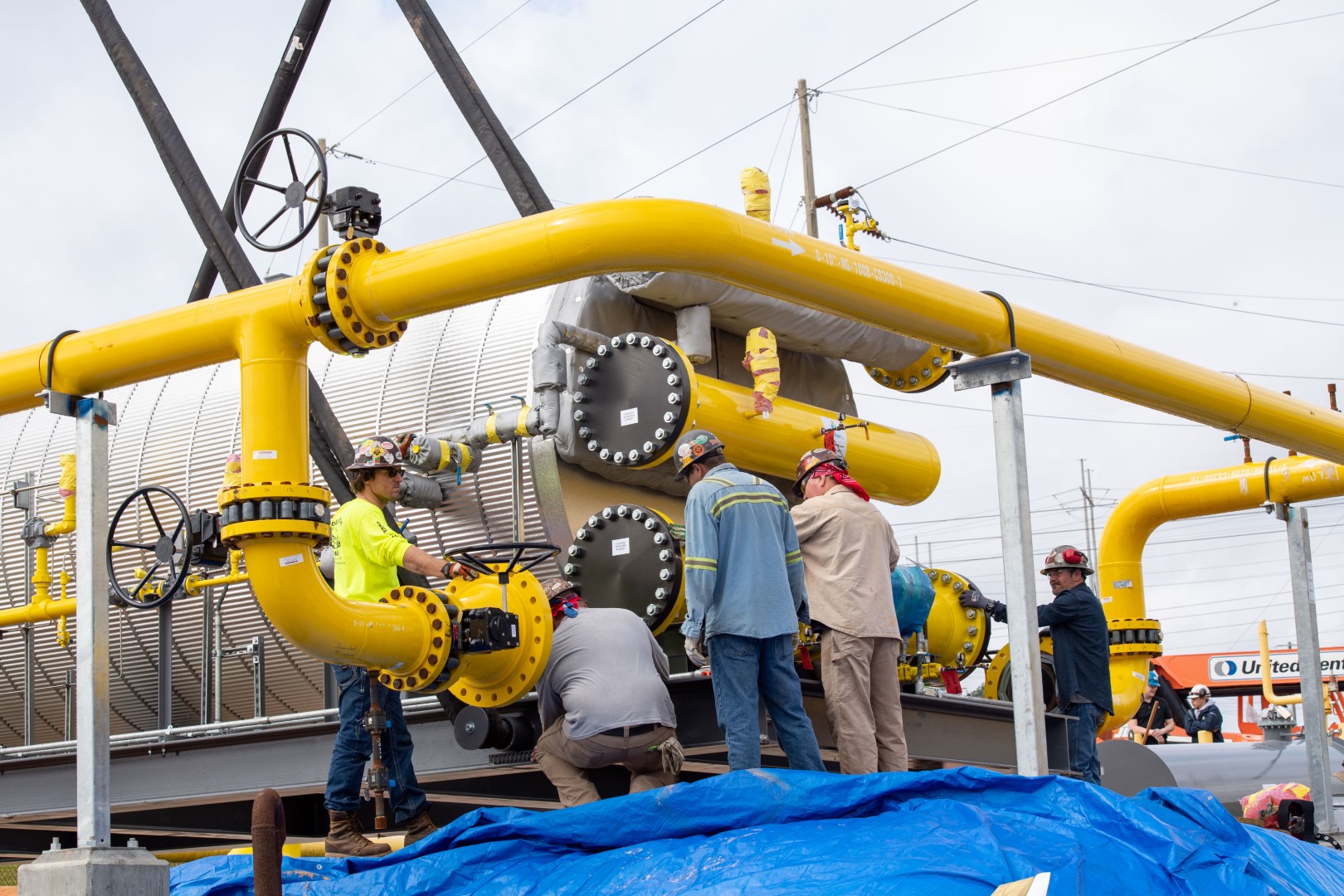
Reliable gas firing depends on gas supply conditions, regulating and flow-control skids, piping, instrumentation, burner-management logic, electrical interfaces, safeguards, and commissioning requirements working together.
6. Balance-of-plant execution
Structures, access, lifting plans, outage sequencing, procurement, installation, testing, and startup determine whether the solution is executable. Early integration reduces late discoveries and supports a controlled outage plan.
Strong conversion plans begin with a plant-wide technical baseline, not a burner specification. That system view protects reliability, clarifies performance objectives, and aligns engineering with execution. At BPS, this is why fuel-conversion work connects studies, equipment planning, controls, construction, and commissioning.





